wearables
Health-Tracking Rings: What the Science Actually Supports (and What's Just Marketing)
Monday, February 9, 2026
8 min read
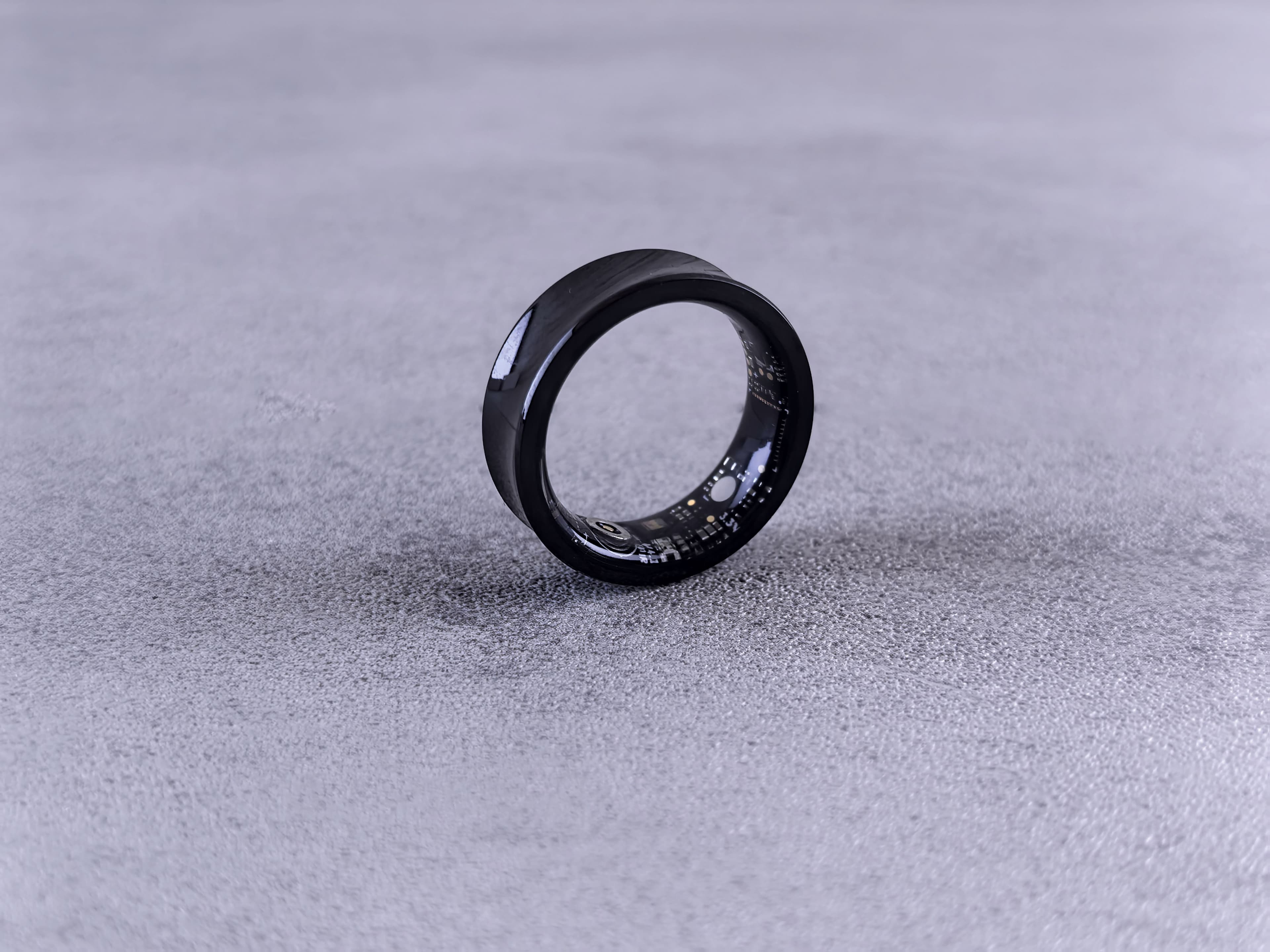
Image license: All Rights Reserved
Attribution: Photo by Andrey Matveev
Source: https://www.pexels.com/photo/sleek-black-smart-ring-on-concrete-surface-34241802/
Last November, a study published in Scientific Reports tested three popular smart rings against polysomnography, the gold standard for measuring sleep in clinical settings. The results were sobering. Across all sleep stages, the Oura and SleepOn ring performed similarly (53.18% and 50.48% accuracy), whereas the Circul ring performed worse (35.06% accuracy). That's a coin flip for telling you whether you were in deep sleep or REM at any given moment. The study's authors were blunt: "Our findings confirm recent descriptions of device-related bias and additionally uncover practical limitations... while some devices may demonstrate reasonable agreement with PSG on average, this agreement masks substantial individual-level inaccuracies."
This raises a question that anyone considering a $350+ smart ring should ask: what can these devices actually measure well, and what's just good marketing?
Where the Science Holds Up
Smart rings are finally going mainstream. The category is on track for a 49% jump in shipments in 2025, according to IDC data, far outpacing an estimated 6% gain by smartwatches. The appeal makes sense. They tend to last longer on a charge and offer more accurate readings. That's due to the fact that fingers have thinner skin than wrists, and that smart ring sensors are positioned close to key arteries.
The strongest evidence supports two core functions: tracking sleep duration and measuring heart rate variability over time.
For detecting sleep vs. wake, the sensitivity was ≥95% for all devices in a Brigham and Women's Hospital study comparing the Oura Ring, Fitbit, and Apple Watch against polysomnography. The Oura Ring did not significantly differ from PSG for the measures time in bed, total sleep time, sleep onset latency, sleep period time, wake after sleep onset, time spent in light sleep, and time spent in deep sleep. In plain terms, the ring knows when you're asleep and for how long. It doesn't hallucinate eight hours when you got five.
Heart rate and HRV tell a similar story. Researchers found "very high agreement" between the Oura Ring and the gold-standard ECG measurement. The Oura Ring performed near-perfect for resting heart rate (r² = 0.996) and extremely well for heart rate variability (r² = 0.980). A more recent independent study from 2025 found agreement ranged from poor to substantial across tested devices, with the strongest accuracy consistently observed for Oura Generation 4 and Generation 3 rings, closely followed by WHOOP 4.0.
The Trend Is the Point
Here's something the marketing often gets right, even if the framing feels like spin: the value isn't in any single night's data.
"It's not enough to know that your heart rate is, say, 52 bpm with zero-point-something accuracy. What's meaningful is that Oura lets you see cause and effect: you start exercising and your HR drops by 5 bpm, or you get sick and your HRV drops by half." (Hannu Kinnunen, Oura)
The true power of smart ring technology lies not in isolated metrics but in longitudinal trend analysis. By tracking sleep stages, HRV, resting heart rate, and activity patterns over weeks and months, users develop personalized baselines and recognize patterns correlating specific behaviors to health outcomes. Did your HRV crater after that late dinner? Is your resting heart rate trending down since you started running? That's useful information, and rings capture it reliably.
Your HRV is intensely personal, shaped by everything from your age and genetics to your fitness level. An elite athlete in their twenties will have a completely different score than a 55-year-old just starting a fitness routine. This is why comparing your number to anyone else's is a waste of time.
The companies know this. Oura's app emphasizes your personal baseline and multi-week averages. Samsung's Galaxy AI builds an "Energy score" from accumulated data. Both approaches make sense scientifically, even if they also happen to encourage long-term subscription revenue.
Where the Marketing Outpaces Reality
Step counting is a problem. And it's not a small one for devices that market themselves as fitness trackers.
Unfortunately, smart rings have a problem with phantom steps that must be fixed before we can fully recommend them. The issue is simple: your hand moves constantly throughout the day, and rings interpret many of those movements as steps. Smart rings across brands will track hundreds or thousands of steps when you're at home or in the office. Typing an email? Take some steps. Gesticulating excitedly during a conversation? Have some more steps! Cooking dinner? Your smartwatch will add maybe 50 steps as you move around the kitchen; your smart ring could add 2–10X that.
The Samsung Galaxy Ring has drawn particular criticism. Step count was always wildly inaccurate; while my Apple Watch would say I took 7,000 steps in a day, the ring thought I took 17,000 steps. In a matter of minutes after waking up in the morning, my ring would report about 500 steps have been taken. Users on Samsung's community forums report similar issues. One user tested by counting 200 steps manually. Their Fitbit said 183. The Galaxy Ring said 92, less than half.
Then there's the blood oxygen situation. "According to my Galaxy Ring, I should probably be dead," one CNN reviewer wrote after seeing readings drop to 77%. "I feel completely fine, by the way, and the blood oxygen sensor in Samsung's own Galaxy Watch Ultra refutes the ring's data entirely."
The Fraud at the Margins
Beyond accuracy issues with legitimate devices, the smart ring market has a scam problem.
Any consumer ring in 2025 claiming to measure blood glucose without a needle (interstitial fluid) is fraudulent. The technology for optical glucose monitoring exists in research labs but requires massive spectrometers not yet miniaturized for rings. Companies claiming this feature are preying on diabetic patients and pose a genuine safety risk.
The FDA released a safety communication stating no smart ring has been authorized to measure blood glucose non-invasively. Thus, when you read "FDA approved smart ring", you must check which feature is approved, and whether the ring's marketing claims align with that specific clearance.
Metric | Evidence Level | Notes |
|---|---|---|
Total sleep time | Strong | Multiple studies show no significant difference from PSG |
Resting heart rate | Strong | Near-perfect correlation with ECG (r² = 0.996) |
HRV (nightly average) | Strong | High correlation (r² = 0.980); useful for trend tracking |
Sleep stage classification | Moderate | 50-76% accuracy; varies widely by device and individual |
Step counting | Weak | Phantom steps from hand movement inflate daily totals |
Blood oxygen (SpO2) | Variable | Some devices unreliable; only Evie Ring has FDA clearance |
Blood glucose | None | No consumer ring can measure this; claims are fraudulent |
The Real Cost of Entry
The hardware alone runs between $199 and $499 for the major players. While the overall experience with the Oura Ring 4 is still miles ahead of its competitors, there's one major downside: the monthly subscription. You need to pay $5.99 to use the ring, which is a substantial ask when you've already paid at least $350 for the hardware.
Oura's revenue includes must-have membership fees, priced at $5.99 per month or $69.99 a year. Its main competitors do not require subscriptions. Samsung's Galaxy Ring and the RingConn Gen 2 both offer their full feature sets without recurring costs, which matters over a two or three year ownership period.
One of the most significant challenges for the smart rings industry is the technological limitations imposed by their compact size. Smart rings must balance advanced functionalities within a small form factor. This constraint often compromises battery life and processing power, as the limited space restricts the inclusion of robust hardware.
What to Actually Expect
If you buy a smart ring in 2026, here's what you're getting: a device that reliably tracks how long you sleep and how your autonomic nervous system is doing over time. It will give you a rough sense of sleep stages, though not accurate enough for clinical use. It will probably overcount your steps, sometimes dramatically. And it will not diagnose any medical condition, regardless of what the marketing implies.
Once you've measured sleep, heart rate, HRV and skin temperature, there isn't much left to add without fundamentally changing what a ring is. The form factor has real limits. But for users who want unobtrusive overnight tracking and don't mind checking their phone for data, the core value proposition holds up. Just don't expect the ring to do everything the box suggests it can.
The next wave of smart rings will likely emphasize two directions: some brands will double down on health and move closer to medical credibility. Others will pivot towards fashion and culture. Which path wins may depend less on sensor accuracy than on whether consumers care about the difference.
Sources
- Scientific Reports - Performance of wearable finger ring trackers for diagnostic sleep measurement in the clinical context
- PMC - Accuracy of Three Commercial Wearable Devices for Sleep Tracking in Healthy Adults
- ScienceDirect - Validity and reliability of the Oura Ring Generation 3 when compared to multi-night ambulatory polysomnography
- PMC - Validation of nocturnal resting heart rate and heart rate variability in consumer wearables
- PMC - Accuracy Assessment of Oura Ring Nocturnal Heart Rate and Heart Rate Variability
- Detroit News (Bloomberg) - Smart rings poised to go mainstream after a blockbuster 2025
Related topics
- OpenAI opens a public window on model misalignment with six new casesThursday, September 17, 2026
- iOS 27 adds Siri AI, faster apps and stricter child controlsFriday, August 28, 2026
- The 2026 Video Game Calendar: From GTA 6 to Resident Evil, What's Coming This YearSunday, February 15, 2026
- How 40$-per-pack Cigarettes Pushed Australians to the Black MarketSunday, February 15, 2026